

What The Bear Teaches Us About Trauma, Perfectionism and Why High Achievers Can't Stop
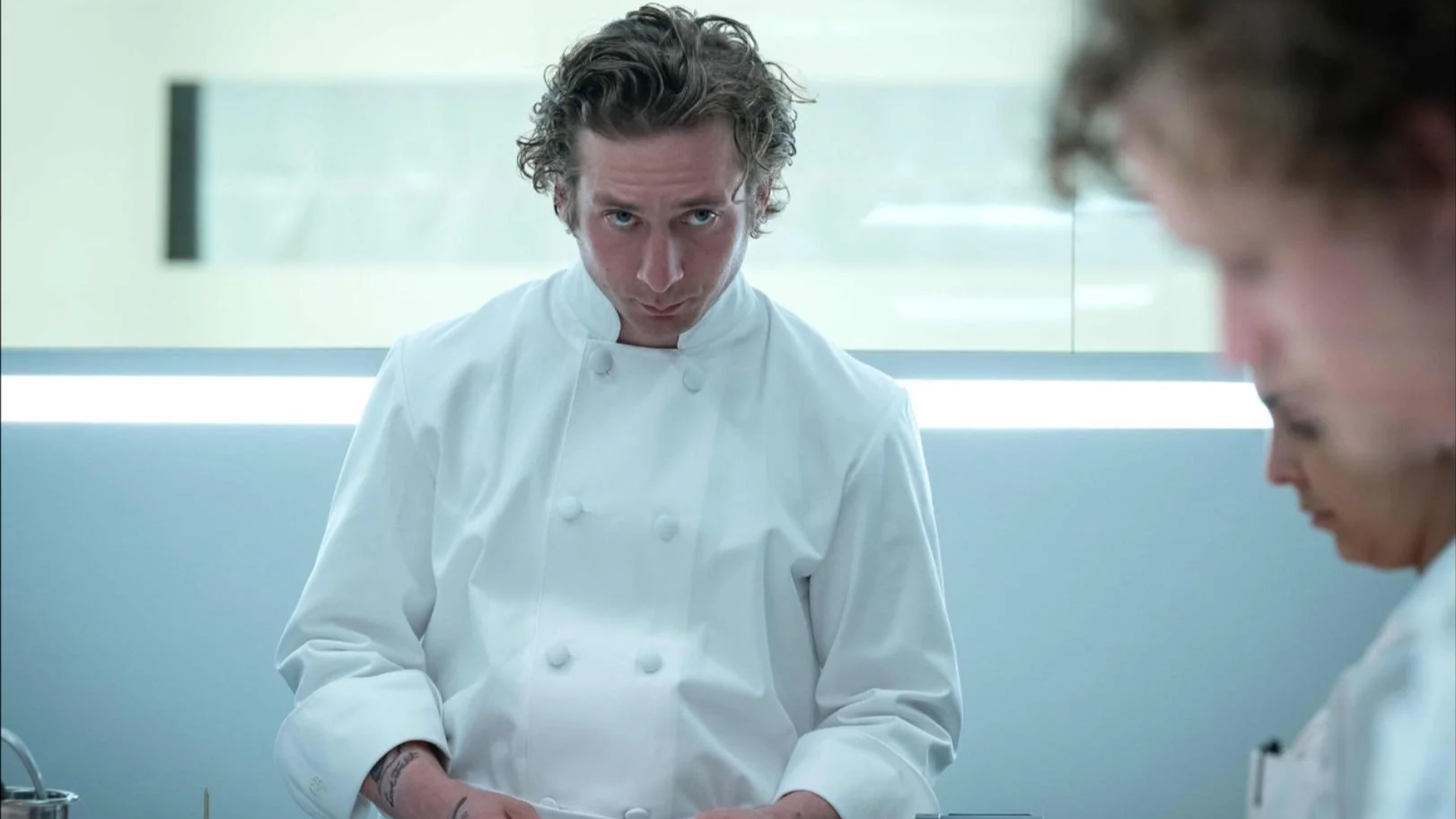
Image supplied. Carmy Berzatto and the belief that rest must be earned.
In this article
Why high achievers use work as a trauma response
How hypervigilance can look like excellence – and why it gets rewarded
Why perfectionism and burnout are often two sides of the same pattern
What it means when stopping feels more frightening than continuing
How counselling can help you understand what your competence has been protecting
This article contains spoilers for all seasons of The Bear.
Carmy Berzatto has spent his life learning how to withstand pressure.
In the final season of The Bear, he does something much harder.
He leaves.
Carmy's decision to step away from the restaurant is not simply the endpoint of burnout. It is the first time he seriously questions the belief that has organised his entire life: that suffering is the price of excellence, and his ability to endure it is what makes him valuable.
For Carmy, leaving is not the opposite of commitment.
It is an attempt to stop repeating the only version of commitment he has ever known.
If you have ever kept going long past the point where stopping would have been reasonable – and felt a quiet dread at the thought of what might surface if you did – his story may feel familiar.
When excellence becomes a protection strategy
Carmy's talent is real. He is disciplined, imaginative and extraordinarily sensitive to detail.
But even a genuine strength can become protective.
The kitchen gives his nervous system somewhere to put everything it cannot otherwise hold: his brother's death, his mother's volatility, the instability of his childhood and the persistent belief that if he stops moving, something unbearable will catch up with him.
In a kitchen, there is always something more urgent than feeling.
The next ticket. The wrong temperature. The person falling behind. The problem only Carmy can see quickly enough to solve.
Work gives him structure. It also gives him somewhere to disappear.
This is a pattern that appears frequently in people who grew up in environments where emotional safety was unpredictable. When you cannot control what happens at home, you learn to control what you can. You get very good at it. And then that competence becomes the way you stay safe in the world long after the original threat has passed.
What hypervigilance actually looks like in high achievers
Carmy moves through the kitchen like someone responding to a threat.
His attention narrows. His body braces. Every mistake feels consequential. He becomes controlling, abrupt and increasingly unable to recognise what his distress is doing to the people around him.
This is hypervigilance – a trauma response that keeps the nervous system scanning for danger, even when the immediate environment is not dangerous.
It does not always look frightened. In high achievers, hypervigilance often looks like extraordinary preparation, rapid problem-solving and the ability to function under pressure that overwhelms everyone else.
These qualities are frequently rewarded.
The person who notices everything becomes indispensable. The person who can tolerate extreme pressure is given more of it. The person who never stops is praised for their work ethic, even when continuing to work is the very thing preventing them from recognising that something is wrong.
Carmy's environment does not merely accommodate his pattern. It celebrates it.
The difficulty is that hypervigilance is not a sustainable strategy – it is an emergency response. It is designed to be temporary. When it becomes a permanent operating mode, it extracts a cost that most people don't notice until the pattern has been running for years.
Why perfectionism is often a trauma response, not a personality trait
The kitchens Carmy trained in taught him to associate mastery with humiliation, deprivation and relentless criticism.
He learns that if the work does not hurt, it may not be serious enough. If he is not sacrificing something, perhaps he has not earned the result. If he relaxes, he risks losing the edge that made him exceptional.
Perfectionism, understood this way, is not a personality trait. It is a coping strategy – a way of pre-empting shame, failure or rejection by making yourself impossible to criticise.
The difficulty is that the strategy works.
Carmy's vigilance makes him precise. His intolerance of mistakes drives improvement. His capacity to endure allows him to succeed in environments that demand far more than should reasonably be asked of anyone.
It works, but it takes more than it gives.
That is often when a pattern becomes visible. Not when it fails completely, but when its cost can no longer be ignored.
Perfectionism produces achievement, but no satisfaction. The relentless work creates a career, but leaves little room for a life. The question is no longer whether the strategy works. It is whether survival is still the only outcome it knows how to produce.
Care does not automatically create capacity
Carmy's distress does not remain contained inside him.
Sydney experiences it as inconsistency and control. Richie experiences it as exclusion and contempt. Claire encounters someone who wants connection but cannot remain emotionally available when the relationship begins to matter.
Carmy cares about all of them.
Care, however, does not automatically create capacity.
He reaches for closeness, then abandons it when the emotional demands become too great. He makes promises from the part of himself that wants a different life, then breaks them from the part still organised around threat.
This is a pattern sometimes called avoidant attachment – a relational style in which intimacy is desired but feels unsafe once it begins to deepen. It is not a choice Carmy makes consciously. It is what his nervous system learned about closeness at a time when he had no other option.
Understanding the origin of this pattern does not remove its impact. Carmy's pain is not his fault, but the people around him still have to live with what his protection does. His history offers context. It does not offer exemption.
Leaving is not failing – but it is not simple, either
This is what makes Carmy's decision in the final season so significant.
He recognises that the kitchen has become a place where his most destructive patterns can continue to masquerade as professional standards. He cannot discover who he is beyond survival while remaining inside a system that rewards him for never standing down.
Carmy has always believed stopping would make him weak, wasteful or incapable of finishing what he began.
But there are forms of persistence that are really avoidance.
There are achievements that keep us from asking whether the life they create is one we want.
There are environments we call demanding because it is harder to admit they are harming us.
Sometimes leaving is not quitting the work. It is ending the repetition.
What remains when the role is gone?
Leaving creates a question Carmy cannot answer through effort.
If he is no longer the person who can withstand anything, who is he?
People whose identities are built around competence can find rest more confronting than exhaustion. Exhaustion is familiar. It provides evidence that they have worked, contributed and suffered enough to deserve their place.
Rest provides no such proof.
Without the role, there may be grief, anger, desire and the realisation that you have become highly skilled at living a life you do not know how to enjoy.
Carmy's final task is not to become better at tolerating pressure. It is to build a self that does not require pressure in order to feel coherent.
If you recognise yourself here
You may recognise the inability to rest without guilt. The pressure that makes you feel effective. The next task that appears whenever an uncomfortable feeling begins to surface.
You may recognise the fear that if you lower your standards, everything will collapse. Or the relationships that receive whatever remains after work has taken everything else.
You may have been told that you are resilient, driven, exceptional. And some of that may be true.
But resilience and avoidance can look identical from the outside. And what gets called drive is sometimes just a person who never learned that it was safe to stop.
These patterns do not mean that you are incapable of coping. They may mean that coping has occupied too much of your life.
A place where stopping is allowed
Counselling does not require you to abandon your ambition or become less committed to what matters.
It can offer a place to understand why stopping feels dangerous, why achievement became inseparable from safety, and what your competence has protected you from having to feel.
At Comma + Co, we work with people who can handle almost anything and are beginning to wonder why they have had to. We work with the patterns underneath the performance – not to take away the capacity that helped you survive, but to give you enough space to decide when to use it, when to put it down, and what else your life might be allowed to contain.
-
Carmy displays several interconnected patterns consistent with complex trauma: hypervigilance (constant scanning for threat), perfectionism as a coping strategy, avoidant attachment in close relationships, and difficulty tolerating rest or emotional vulnerability. These are not character flaws – they are adaptations that helped him survive a chaotic and emotionally unsafe childhood, and which his environment continued to reward in adulthood.
-
It can be. For many high achievers, perfectionism develops not from a love of excellence but from a learned belief that being good enough – truly good enough – offers protection from shame, rejection or failure. When perfectionism originates this way, it tends to produce achievement without satisfaction, because the underlying fear is never actually resolved by the result.
-
Hypervigilance is a state of heightened alertness in which the nervous system remains on guard for potential threat. In professional environments, it can appear as exceptional attention to detail, rapid problem-solving, an inability to delegate, low tolerance for mistakes, and difficulty switching off after work. It is frequently praised as dedication or professionalism, which is part of what makes it hard to recognise as a stress response.
-
Yes. Counselling can be particularly helpful for people who have noticed that their usual strategies – working harder, pushing through, setting higher standards – are no longer producing the relief or satisfaction they once did. Therapy offers a space to explore the origins of these patterns, understand what they have been protecting, and begin building a relationship with yourself that is not entirely organised around performance.
-
You might consider therapy if you find it difficult to rest without guilt, if achievement no longer feels satisfying, if you are consistently depleted but cannot seem to slow down, or if your relationships are receiving whatever is left after work has taken everything else. These are not signs of weakness – they are signs that a pattern which once served you is now costing more than it gives.
This article is part of Character, Considered, where we look beyond the plot to explore the psychological, relational and leadership patterns that shape some of our favourite characters. Partly because they give us enough emotional distance to recognise something of ourselves, and partly because Carmy Berzatto has made "Yes, Chef" sound like both a promise and a warning.
ABOUT THE AUTHOR
Kate Reddin is a Melbourne-based counsellor and executive coach registered with the Australian Counselling Association (ACA) and the Psychotherapy and Counselling Federation of Australia (PACFA). She holds a Master of Counselling and a Bachelor of Arts in psychology and visual communication, and brings 25 years of experience in commercial communications, leadership and executive coaching to her clinical and coaching work with individuals, leaders and organisations.
Kate is the founder of Comma + Co, a Melbourne counselling and coaching practice specialising in supporting people to create space for what’s next . She is a listed practitioner on Psychology Today.
Continue the Character, Considered collection
This piece takes the wider view of how trauma, shame and perfectionism organise Carmy’s inner life and drive his pursuit of excellence. For what happens when those adaptations follow him into intimacy, see When Connection Feels Like a Trap: Understanding Fearful-Avoidant Attachment. For how they shape his leadership and professional relationships, see When the Coping Mechanism Becomes the Ceiling.